
I bought a new car this summer, and before I had even signed the paperwork I was told that when the customer survey arrives I should try to give the seller "all 5s," and that if I couldn't, I should talk to him first to explain why. The ostensible reason to talk to the seller is so that he can improve on his performances in future, but my guess is that it is actually to guilt the buyer into giving the seller all 5s, either so she doesn't have to talk to the seller again, or because she is convinced that to not give him that score would be somehow unfair to him. I passively aggressively refused to complete the survey, despite at least semi-weekly requests to do so. I do feel a bit rude, but "if you can't say anything nice, say nothing at all," as they say.
In the world of internet book publishing, the customer review may be even more important than the silly auto survey I won't do. With the demise of both physical book stores and newspaper literary review columns, one must either magically come upon a book after an Amazon or Google search, or see some sort of online review of it in order to purchase and read it. The online review has become all pervasive--I can review not just my favorite (and least favorite) book, but my bank, bowling alley, and Brazilian restaurant with little effort. These items and places want me to review them, and they sometimes even give incentives for it.
Of course, no one is supposed to buy favorable reviews, because money makes people do things they might not otherwise, like lie, saying they had the best meal ever when it was actually lukewarm and bland. Of course, just because no one is supposed to doesn't mean no one does. A recent NYT article discusses just this subject: a man started a business in which he sold favorable book reviews, often multiple reviews for the same book, to fledgling authors who wanted to become noticed online in order for their books to sell. Some authors purchased the service saying they didn't need the reviews to be positive, but most expected to buy positive reviews. The author explains that
Consumer reviews are powerful because, unlike old-style advertising and marketing, they offer the illusion of truth. They purport to be testimonials of real people, even though some are bought and sold just like everything else on the commercial Internet.
We know that advertising exists to sell us a product, and most of us can see the falsehoods in claims advertisements make. A review, on the other hand, is not created by a marketer and is not automatically positive, so we are doubly swayed when we see a positive review. A problem arises, though, when the reviews are not only falsely positive but also based upon nothing; Todd Rutherford appears to have fabricated reviews for clients of books he had not read, in essence scamming both the consumer and his client. Rutherford explains that “Objective consumers who purchase a book based on positive reviews will end up posting negative reviews if the work is not good,” but he apparently has no problem selling those objective consumers the bad book in the first place. We've all read a bad book, and few will go hungry over the cost of that book, but I think I might feel rather betrayed by a terrible book with overwhelmingly positive reviews.
Showing posts with label advertising. Show all posts
Showing posts with label advertising. Show all posts
29 August, 2012


10 August, 2011
On Pecuniary Emulation, Product Placement, and Film
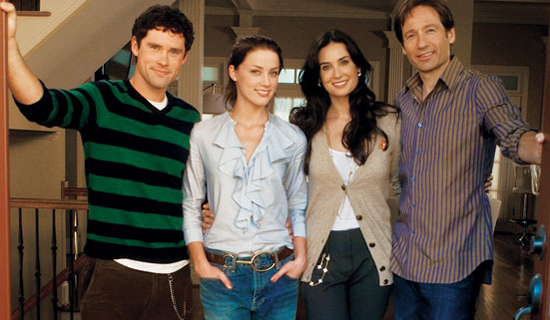
The title of the film itself is, of course, a nod to the phrase "keeping up with the Joneses," and in some ways it does critique a society which seems to prize possessions above all else, and the costlier, the more prized. The movie does take a tragic turn as a direct result of this "pecuniary emulation" (to coin Veblen again), and certainly the satire does, at times, come through to the viewer. However, at least as much as The Joneses tried to satirize a love for things over human relationships, it also actually attempted to sell us the products supposedly being critiqued. At one point in the film, David Duchovny's "son" says "doesn't it bother you that we're lying to them?" and Duchovny replies with "I'm not lying, I LOVE this car!" The movie is ultimately little more than one big advertisement for Audi, Ethan Allen, HTC, and dozens of other products the "Joneses" are very happily consuming and selling. It seems to me that a satire would be better served by use of products that don't actually exist in real life, and that this movie is at least as insidious as its characters by pretending to make fun of what it is actually trying to sell to its viewers. I felt slight outrage (while secretly wanting an Audi for myself), and my only consolation in all of this is that the film made far less at the box office than it cost to produce.
30 June, 2011
As American as Mock Apple Pie
For several years I have half-heartedly questioned whether fraud is a quintessentially American preoccupation, or a universal and eternal activity somehow ingrained in human nature. I have so far made few conclusions, but have found much evidence in literature and news headlines to suggest that, at very least, I am not the only person who suspects that (since its foundation, anyway) the United States has always contained fraud's richest soil.
H.G. Wells's Tono-Bungay is a wholly English story which somehow manages to be American in all of the places forgery, quackery, and money are involved. Edward Ponderevo, king of quacks, follows American models in all of his dealings, rising to financial prominence through (false?) advertising, dubious acquisitions, and shady stock exchange transactions which seem very much at odds with his nephew's understanding of England and its people. A new way of doing business is simultaneously an American and an illicit way throughout the novel, and George never quite comprehends it. Uncle Ponderevo wishes he'd "been born American--where things hum," and is continually trying to convince his nephew that the current times are best suited for advertising and show and selling things not for what they're worth, but for what you can get for them.
I thought I might get some insights into the relationship between Tono-Bungay and America from Theodore Dreiser's introduction of it in the edition I got from the library; I could find many parallels between Dreiser's Financier and Uncle Ponderevo, though financial speculation is a serious business in Dreiser, while in Wells it's mostly absurd. Dreiser's introduction just told me to read the novel, and made no mention of America or quackery or anything financial, so I am left to make my own conclusions. Wells writes about the state of England in 1908, but I think he's wary of America's increasing influence in it as much as he is of the country's natural decay. The narrator does not see buncum and shady dealings as innate to England, and it seems to me that America and fraud could be nearly synonymous in the novel. Whether or not this is/was a commonly held view of America, I am still attempting to discover.
H.G. Wells's Tono-Bungay is a wholly English story which somehow manages to be American in all of the places forgery, quackery, and money are involved. Edward Ponderevo, king of quacks, follows American models in all of his dealings, rising to financial prominence through (false?) advertising, dubious acquisitions, and shady stock exchange transactions which seem very much at odds with his nephew's understanding of England and its people. A new way of doing business is simultaneously an American and an illicit way throughout the novel, and George never quite comprehends it. Uncle Ponderevo wishes he'd "been born American--where things hum," and is continually trying to convince his nephew that the current times are best suited for advertising and show and selling things not for what they're worth, but for what you can get for them.
I thought I might get some insights into the relationship between Tono-Bungay and America from Theodore Dreiser's introduction of it in the edition I got from the library; I could find many parallels between Dreiser's Financier and Uncle Ponderevo, though financial speculation is a serious business in Dreiser, while in Wells it's mostly absurd. Dreiser's introduction just told me to read the novel, and made no mention of America or quackery or anything financial, so I am left to make my own conclusions. Wells writes about the state of England in 1908, but I think he's wary of America's increasing influence in it as much as he is of the country's natural decay. The narrator does not see buncum and shady dealings as innate to England, and it seems to me that America and fraud could be nearly synonymous in the novel. Whether or not this is/was a commonly held view of America, I am still attempting to discover.
27 June, 2011
Pop and Individuality

Subscribe to:
Posts (Atom)